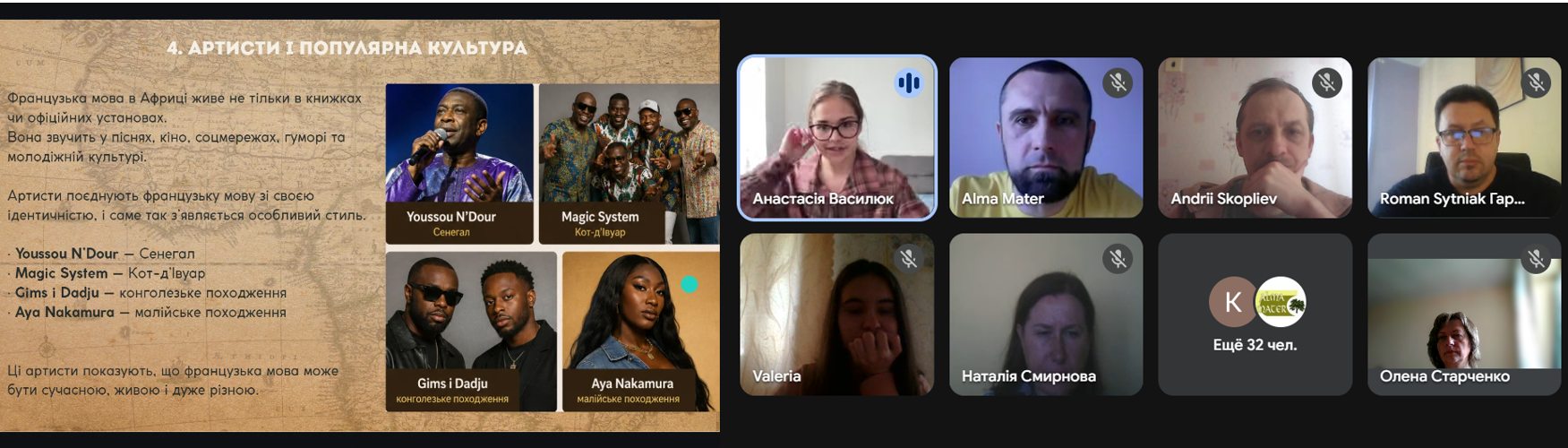
On May 7, 2026, an exciting online meeting of students, scientific and pedagogical workers and guests of the Horlivka Institute of Foreign Languages took place, which was dedicated to the incredible linguistic diversity of Africa. The organizers of the event were the Virtual Resource Center "Digital Language Hub", the Educational and Scientific Center of Modern Technologies for the Formation of Professional Competence and the Department of Linguistics and European Languages. The speakers and consultants of the event were Assoc. Prof. O. S. Shlapakov, Assoc. Prof. O. L. Kolesnichenko, Prof. S. A. Komarov, Senior Lecturer A. O. Skoplev, Lecturer V. V. Vorotilova, Assoc. Prof. O. V. Semenova, Assoc. Prof. M. Yu. Shkuropat and student of group 411b Anastasia Vasilyuk.
The lecture-trip allowed participants to look behind the scenes of history and understand how the modern linguistic landscape of Africa was formed - from the era of the pharaohs to the digital modernity.
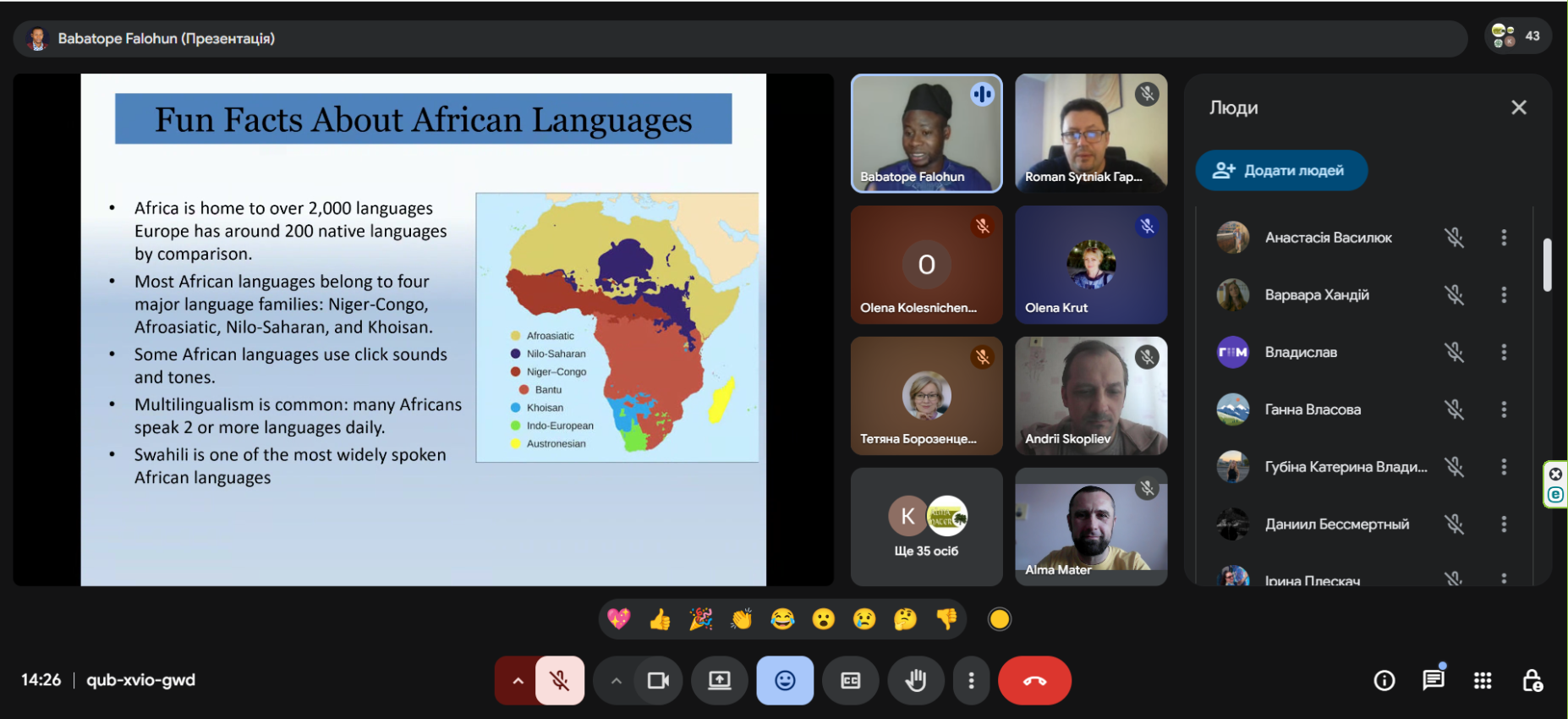
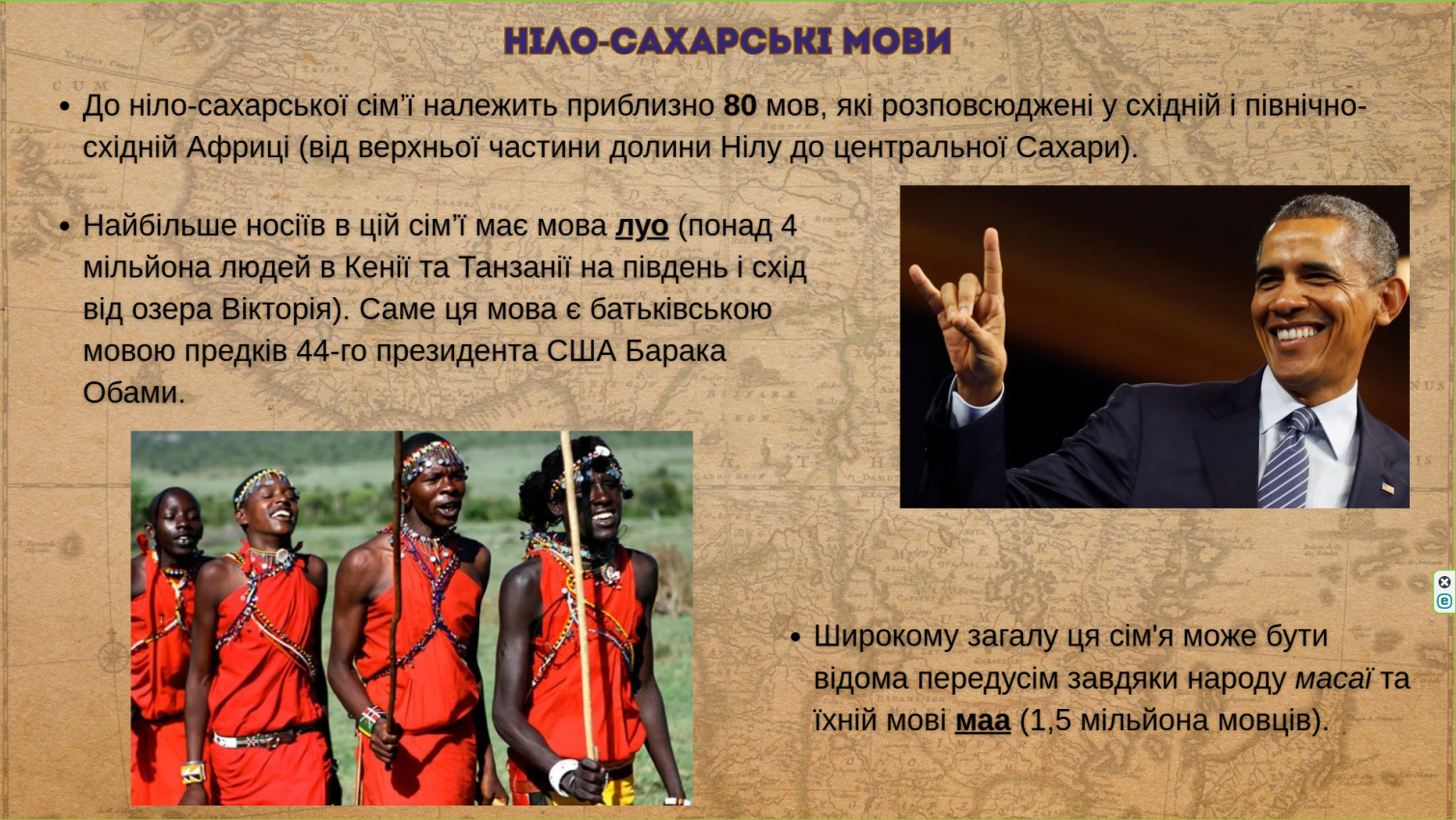
The participants discovered a complex linguistic map of the continent, where the diversity of African languages is harmoniously organized into four large families: Niger-Congo, Afroasiatic, Nilo-Saharan, and Khoisan.
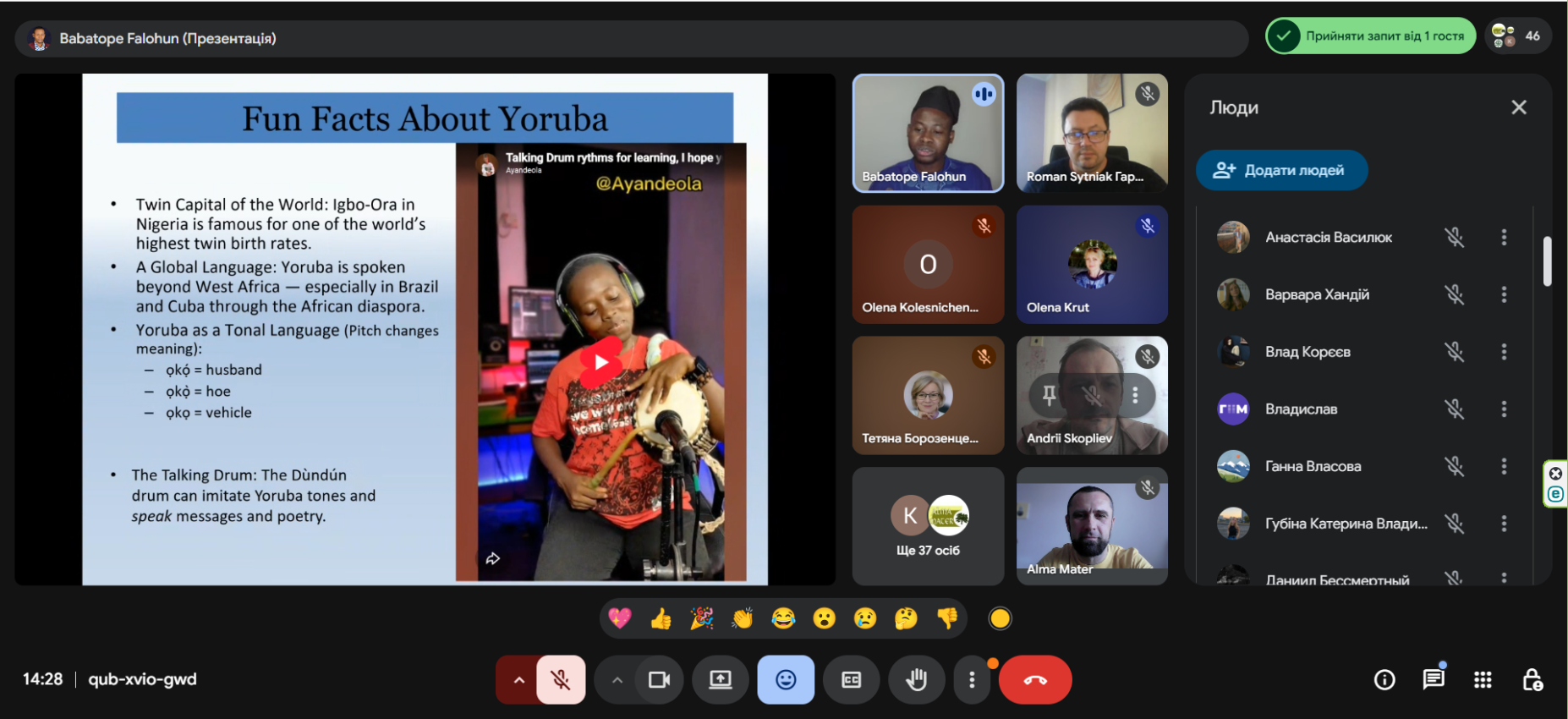
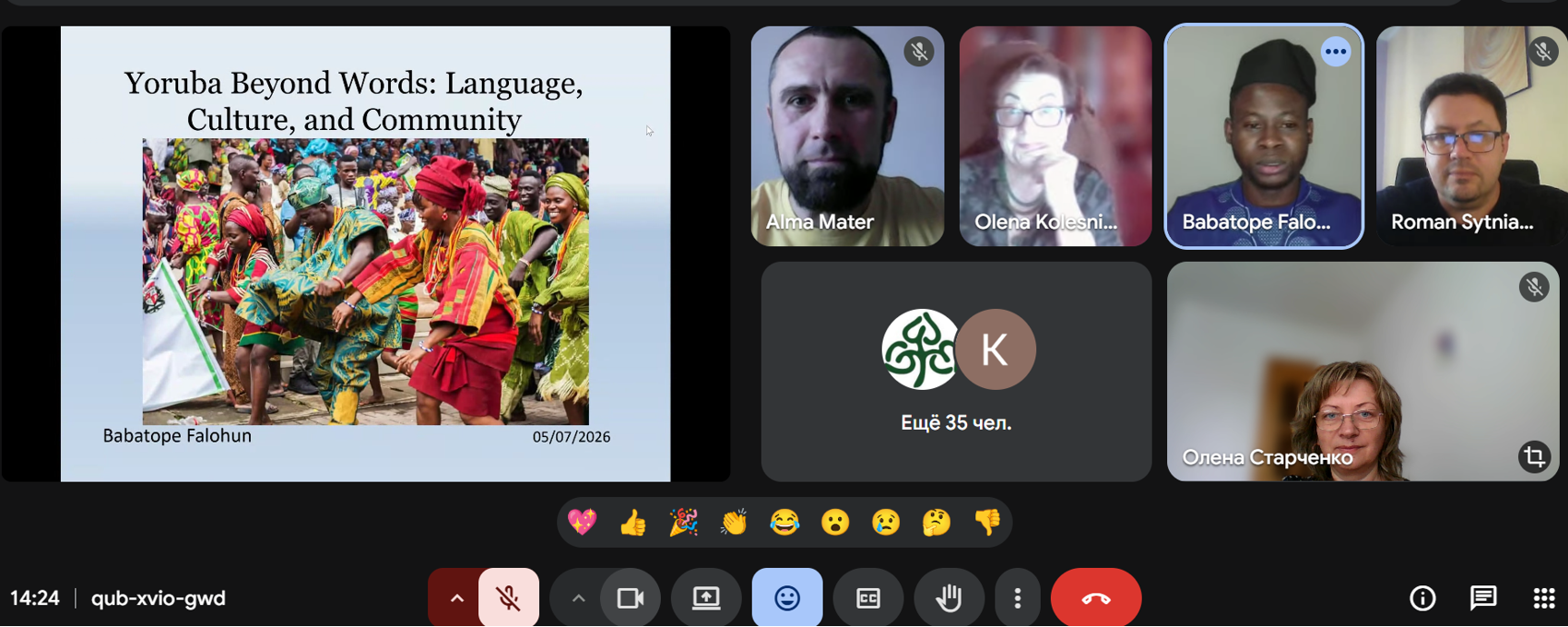
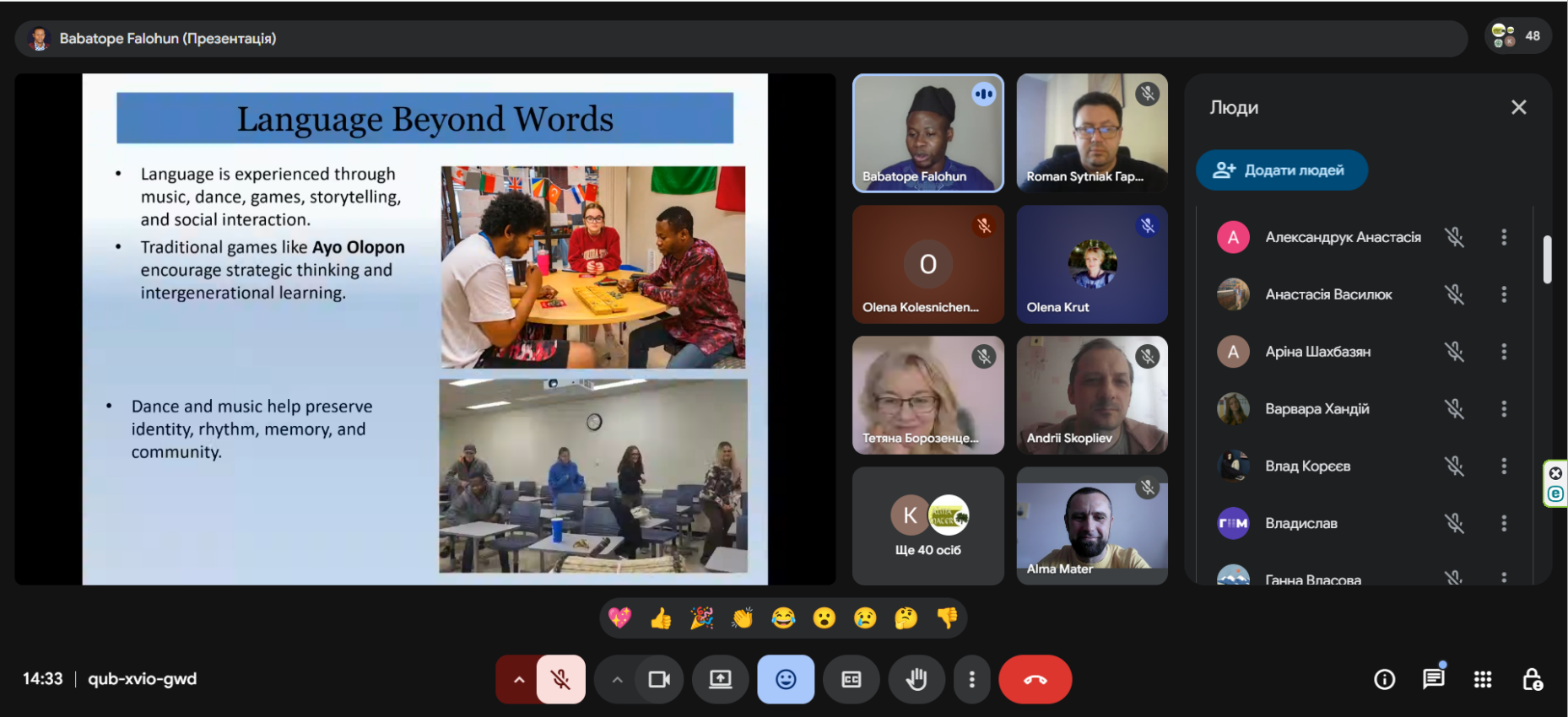
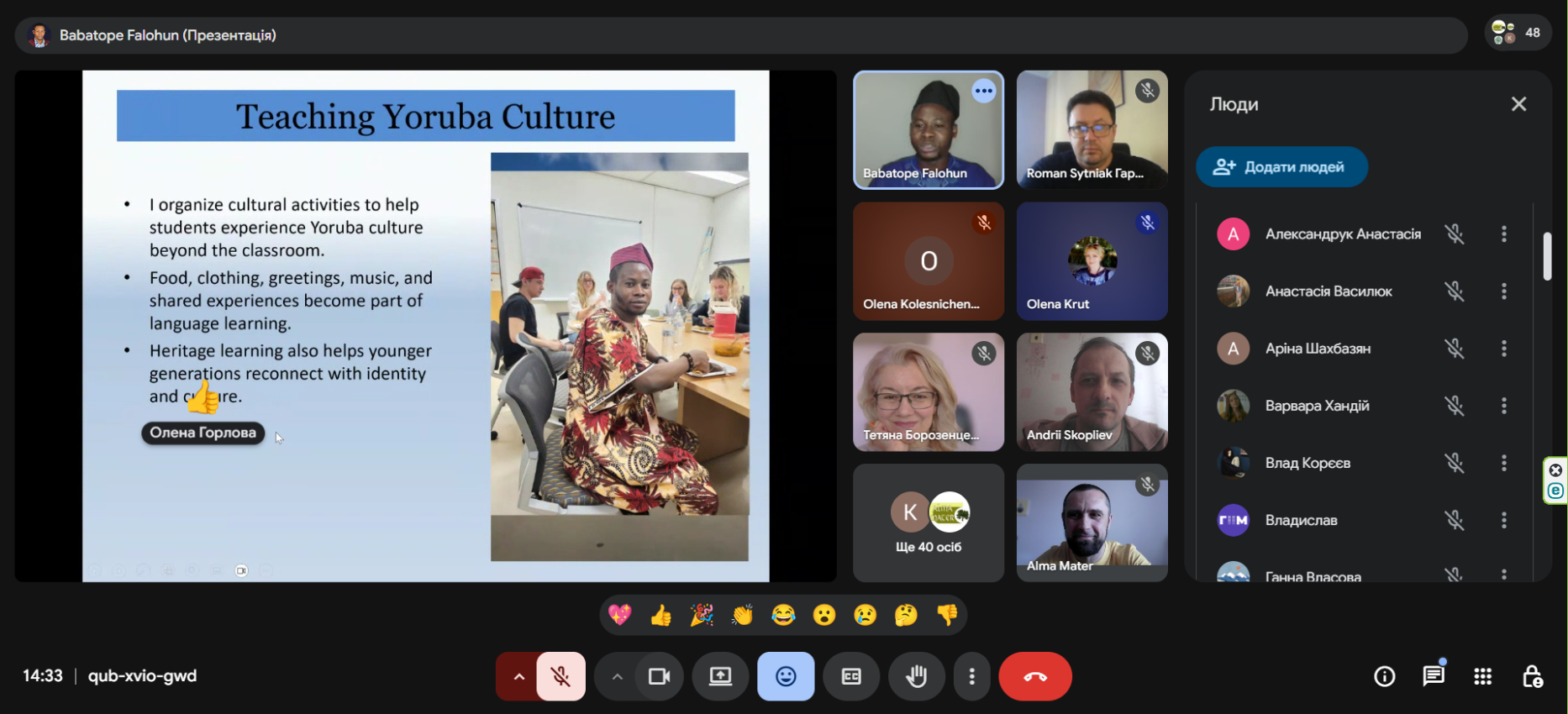
The guest of the event was a young scholar from Nigeria, Babatope Falohun, who is a native speaker of the local Yoruba language. He told all the participants of the trip in detail about the features and specifics of his native language.
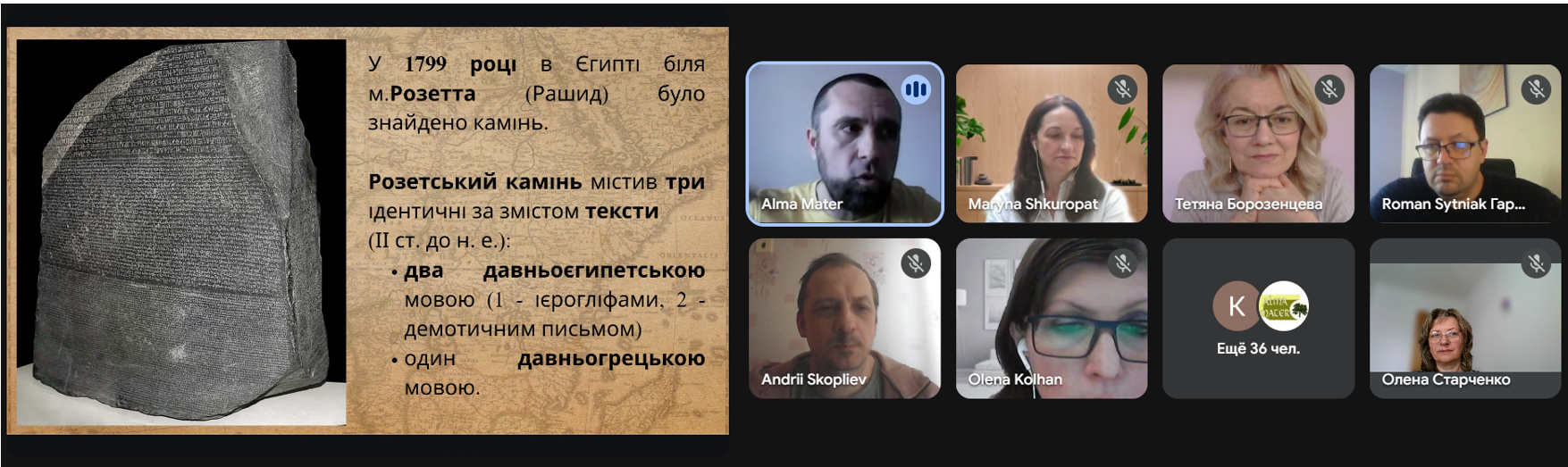
The legendary ancient Egyptian language was not left out of the travelers' attention. Emphasis was placed on the history of the revival of the ancient Egyptian language and the importance of the Rosetta Stone for its decipherment.
In addition, the participants of the trip learned about the role of the ancient Greek language in the history of Egypt. In particular, it was noted that the native language of the last Egyptian pharaoh, Cleopatra, was ancient Greek (but she knew ancient Egyptian very well).
During the linguistic expedition, special attention was paid to European languages that spread in Africa as a result of the colonial period: English, French, Spanish, and German. Participants learned about the specifics of the functioning of these languages in different African countries and the formation of their local variants.
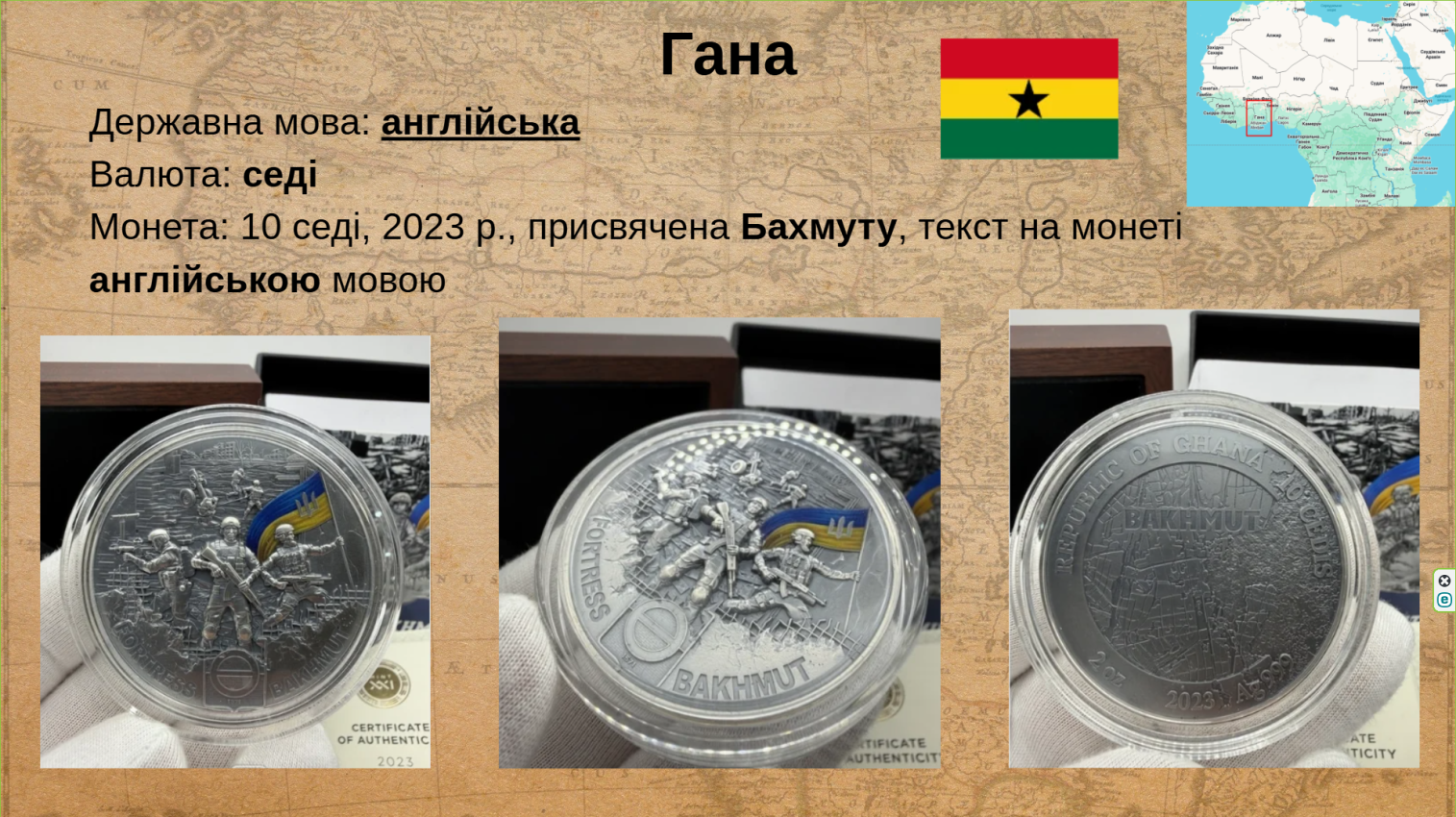
A significant part of the trip was devoted to English, which is today the state or official language in many African countries, including Nigeria, Ghana, Sierra Leone, Liberia, Gambia, Kenya, Uganda, Tanzania, Rwanda, South Sudan, South Africa, Zimbabwe, Zambia, Malawi, Botswana, Namibia, Eswatini, Lesotho, Cameroon, Mauritius, Seychelles and Eritrea. It was emphasized that English often acts as a lingua franca between different ethnic groups, and is also actively used in the fields of education, culture, media, public administration and international communication. In this context, the South African writer, winner of the 2003 Nobel Prize in Literature, John Maxwell Coetzee, was mentioned.
Participants also learned about the spread of French in Africa. It is the state/official language in many countries on the continent, including Benin, Burkina Faso, Gabon, Guinea, the Democratic Republic of the Congo, the Republic of the Congo, Côte d'Ivoire, Senegal, Togo, Burundi, Djibouti, Equatorial Guinea, Cameroon, Rwanda, the Central African Republic, Chad, the Comoros Islands, Madagascar and Mauritius. In these countries, French remains the language of education, culture, politics, business and media.
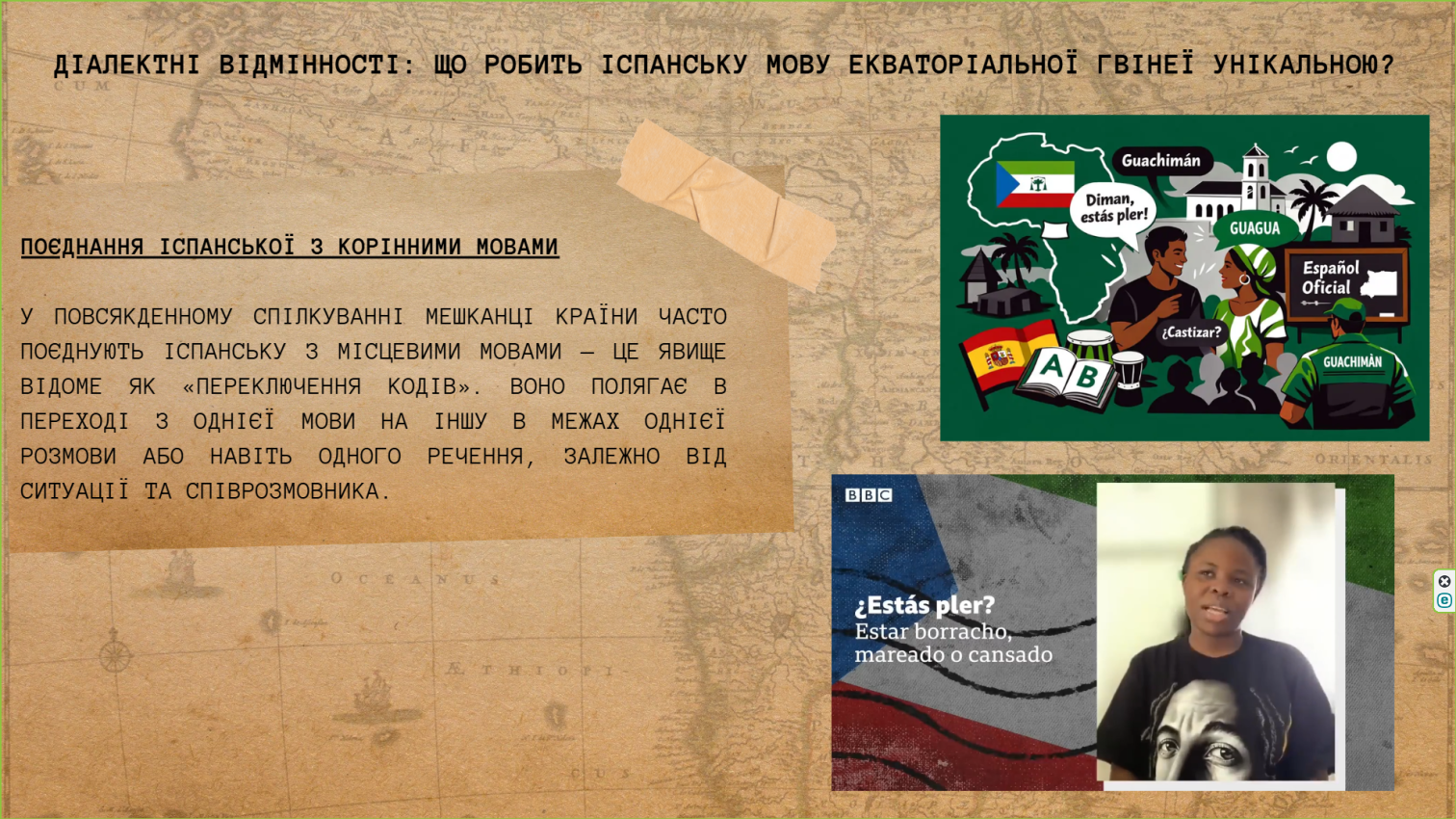
The lecture-trip also examined the peculiarities of the functioning of the Spanish language in Equatorial Guinea, the only African country where it has the status of one of the official languages. Participants learned about the phenomenon of "code switching", when speakers combine Spanish and local languages within the same conversation or even sentence.
The audience also discovered the role of the German language in Namibia, where it was official until 1990, but still retains a noticeable influence.
The lecture-trip "How Does Africa Speak?" was an interesting opportunity for participants to learn more about the linguistic diversity of Africa.
To new travels!