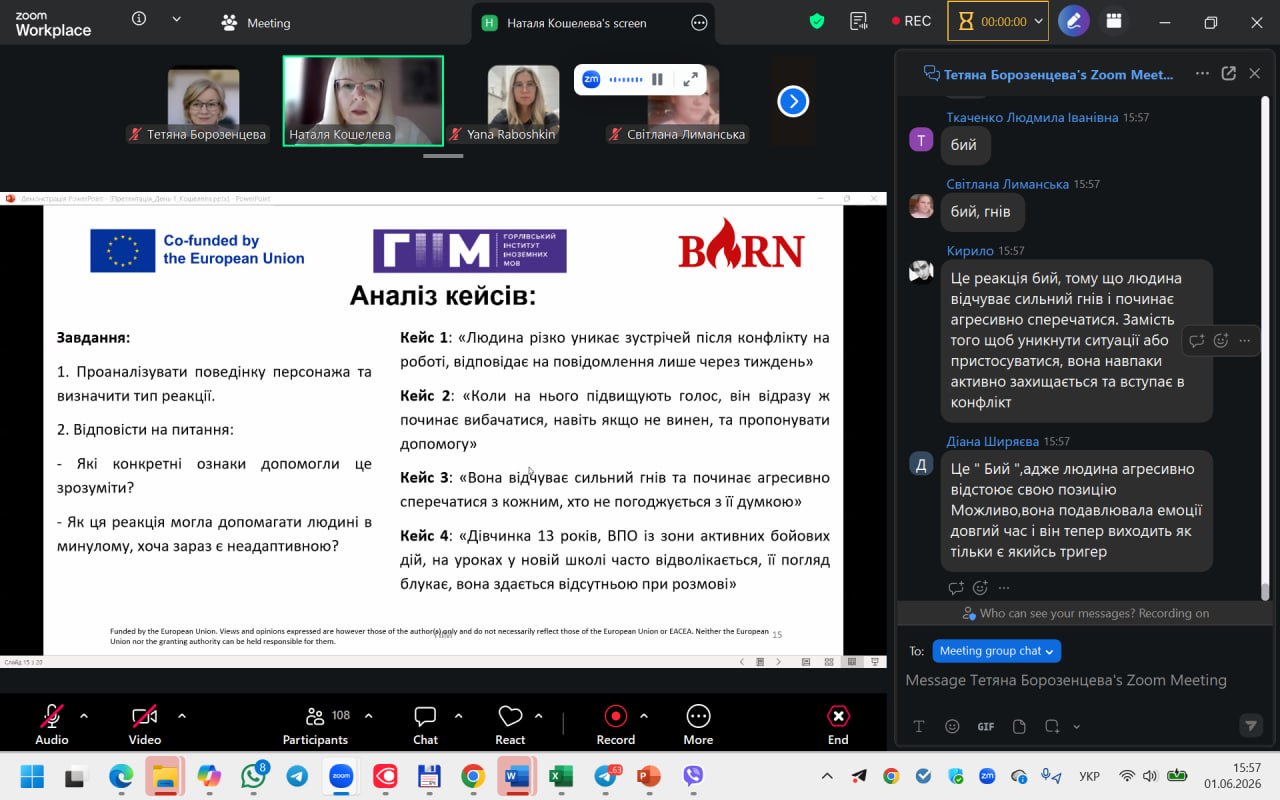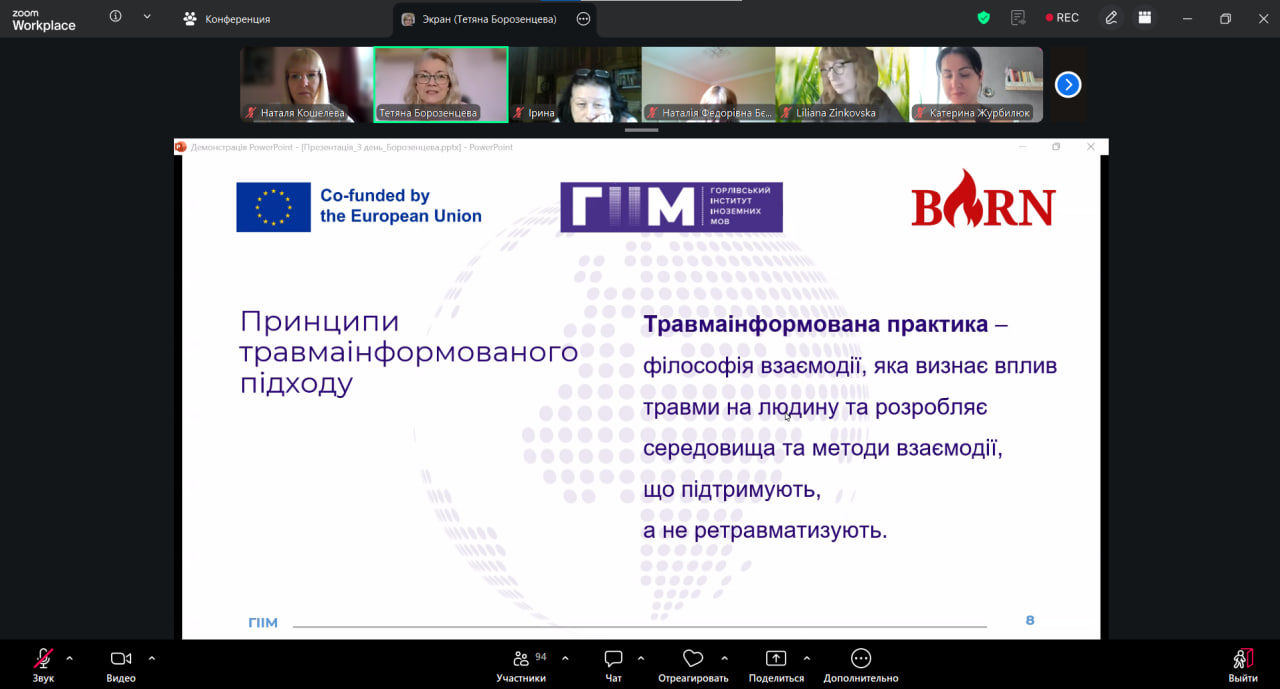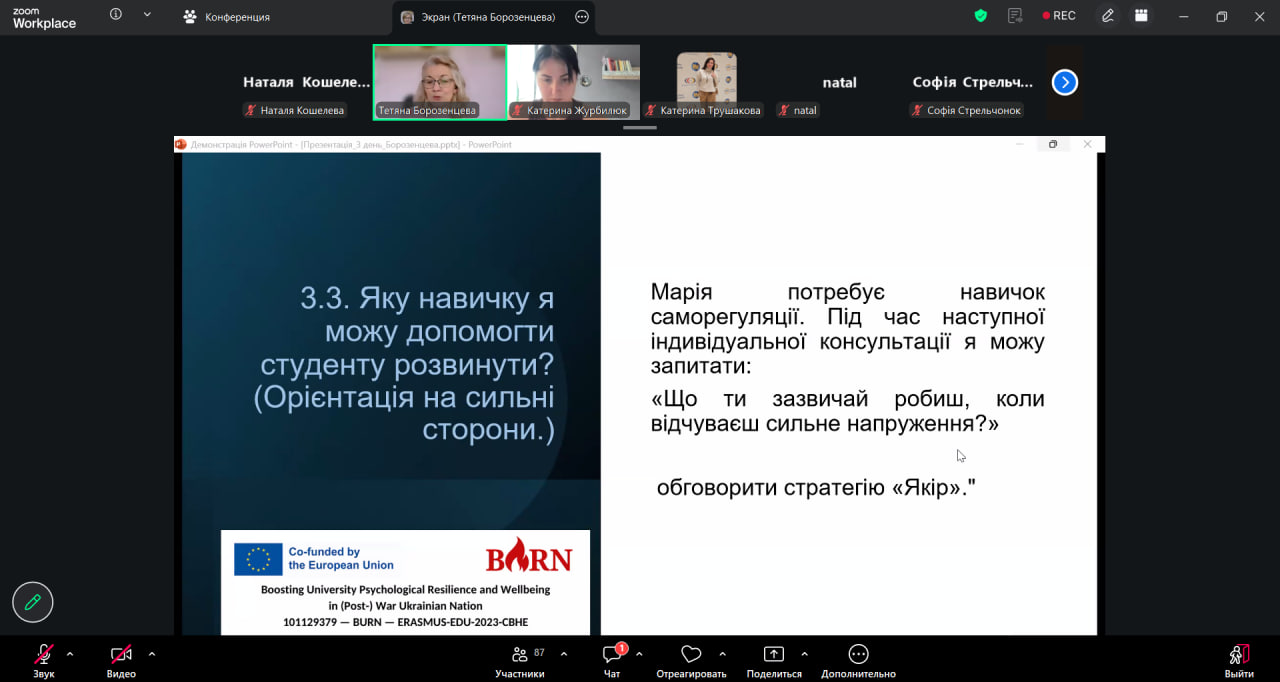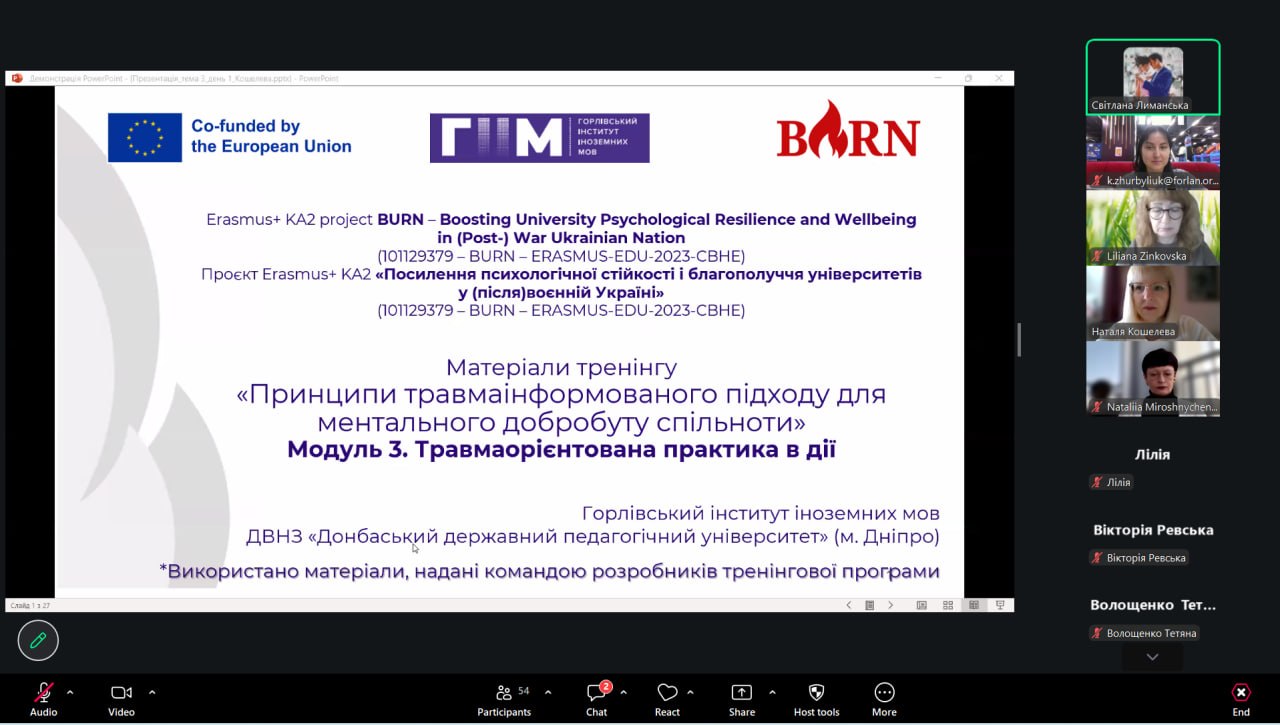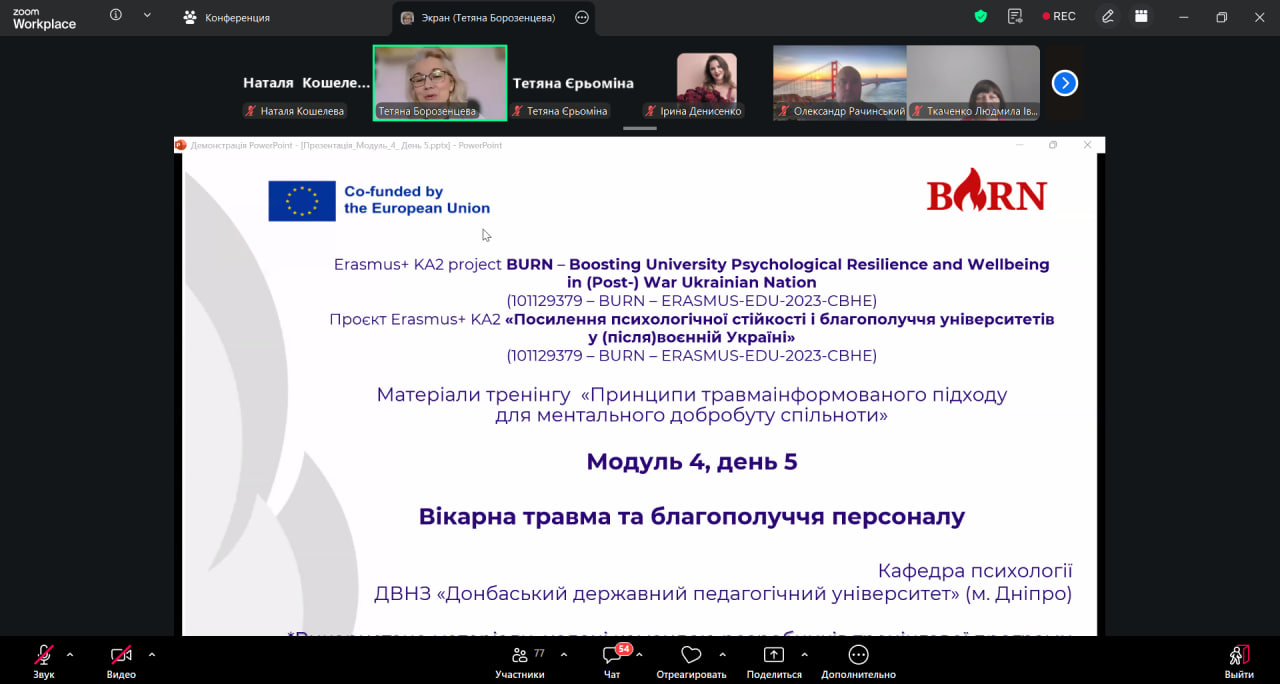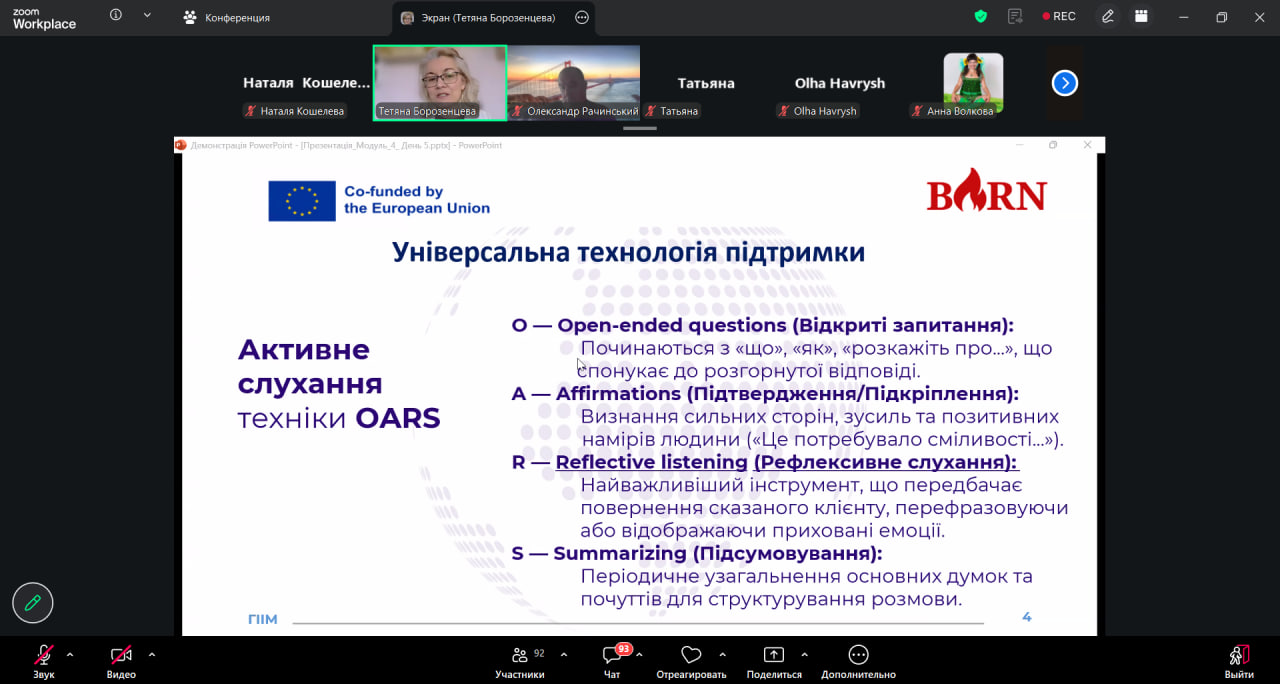
During June 1-5, 2026, psychological trainings were held at the Horlivka Institute of Foreign Languages for teachers, psychologists, social educators, representatives of the ZZSO administration, teachers of higher education institutions, public figures, volunteers, students and graduates of the GIIM, united by the Summer School program "Principles of a Trauma-Informed Approach for the Mental Well-Being of the Community". The trainings were organized by the Institute's Center for Psychological Resilience with the support of the Erasmus+ KA2 BURN project - "Strengthening Psychological Resilience and Well-Being of the University Community in the (Post)War Ukrainian State" (BURN - ERASMUS-EDU-2023-CBHE), funded by the European Union. The trainings were conducted by associate professors of the Department of Psychology of the GIIM T.V. Borozentseva and N.G. Kosheleva.
The aim of the trainings was to provide professionals working with war-affected people with the skills needed to effectively interact with victims, manage vicarious trauma, and create a safer and more supportive environment for all without retraumatization and with concern for their own professional well-being. The training sessions were united by cross-cutting themes: “Understanding Trauma”; “Principles of Trauma-Informed Practice”; “Trauma-Informed Practice in Action”; “Vicarious Trauma and Staff Well-Being” and included a large number of practical cases, tasks, stabilization techniques, and training exercises. The result of the training is the ability of participants to provide safe, empathetic and trauma-oriented support to war victims, based on modern scientifically based methods of stabilization, development of stress resistance, work with various forms of loss and tools that reduce the emotional stress of victims, contribute to the return of a sense of control and security, and also help the specialists themselves maintain their own psychological balance.
Feedback from the training participants showed significant interest in the topic of trauma-informed approach, satisfaction with the received relevant knowledge, valuable practical skills, training methods and warm comfortable psychological atmosphere, which indicates the success of the work carried out. The participants plan to implement the acquired competencies in life for self-support and providing psychological assistance to relatives, pupils, students, colleagues, clients, etc. Relevant topics for future events were outlined, including: the formation of emotional resilience in crisis conditions; support for mental health and self-regulation; management of emotional intelligence; prevention of emotional burnout; psychological support for children during war; communication with families of military personnel, etc., which inspires further fruitful work.