
One of the main indicators of the effectiveness and success of Erasmus projects is their sustainability, that is, the ability to use the results in the educational process, in scientific research, in informing the general public, etc. There is such a conditional trinity of "S" - SUSTAINABILITY, STABILITY, CONSISTENCY. The project "Academic Response to Hybrid Threats" (WARN- Academic Response to Hybrid Threats Erasmus+Capacity Building Project 610133-EPP-1-2019-1-FI-EPPKA2-CBHE-JP) was completed in November 2024. Today we inform the institute's staff about giving the project a new lease of life at a new level - a graduate of the master's program "Secondary Education (History). Psychology" in 2023 (this OP was a participant in the specified project) Tatyana Shtager entered the third educational and scientific level of higher education. She chose the topic of her dissertation research to study the component of hybrid warfare – information warfare. The Academic Council of the Institute approved her topic “Ukrainian-Russian relations in the era of statehood formation in the light of modern information warfare (1991-2024)”. It is also important to note that Tetyana Mykolaivna was in the group of the first group of master’s degree participants in the project.
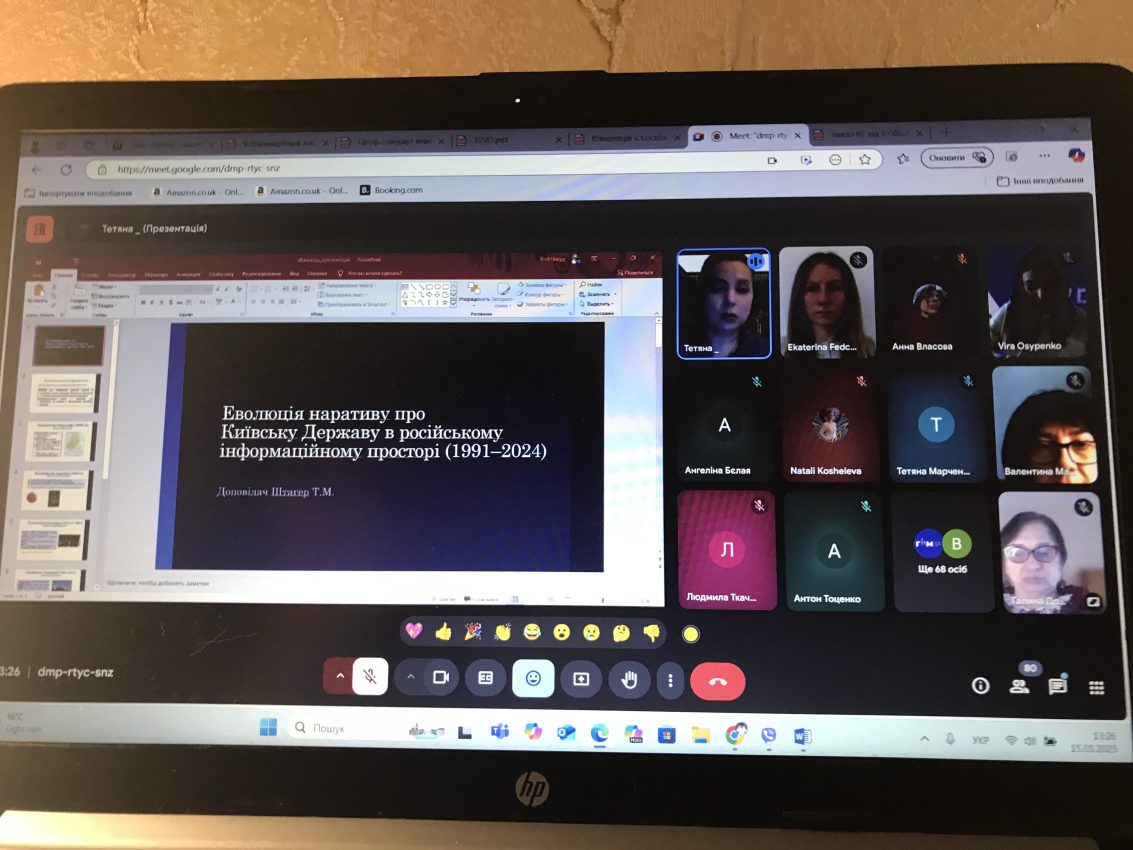
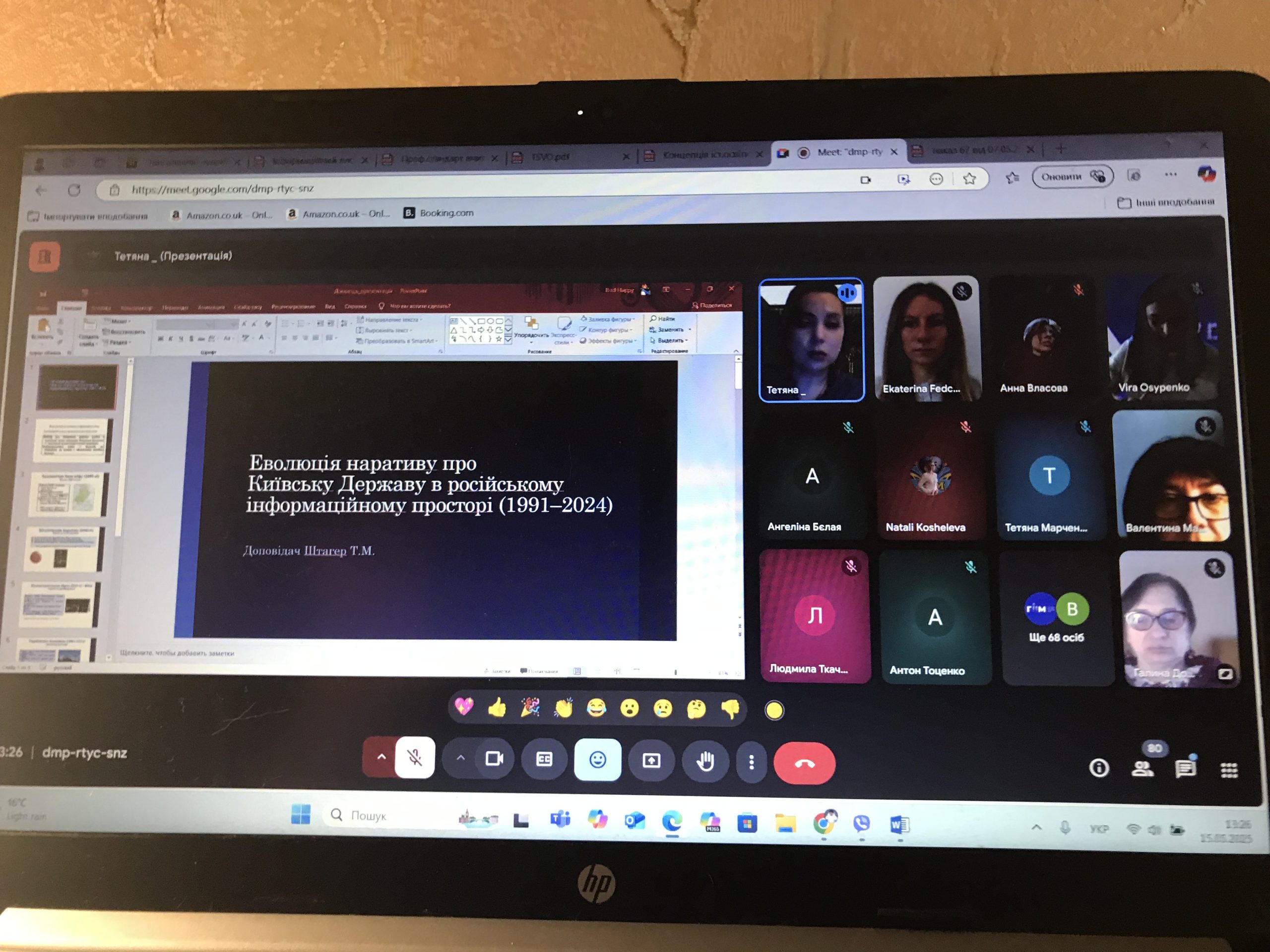
At the conference of young scientists on April 15, we were already able to get acquainted with the first results of work on the topic, as at the plenary session we heard a report by T. Shtager “The Evolution of the Narrative about the Kyivan State in the Russian Information Space (1991-2024)”. She identified the stages of development of this narrative, based on the analysis of documents, materials in the media, and scientific works of Ukrainian and foreign authors.
We wish the young historian success, and we believe in new manifestations of stability and sustainability of the WARN project.