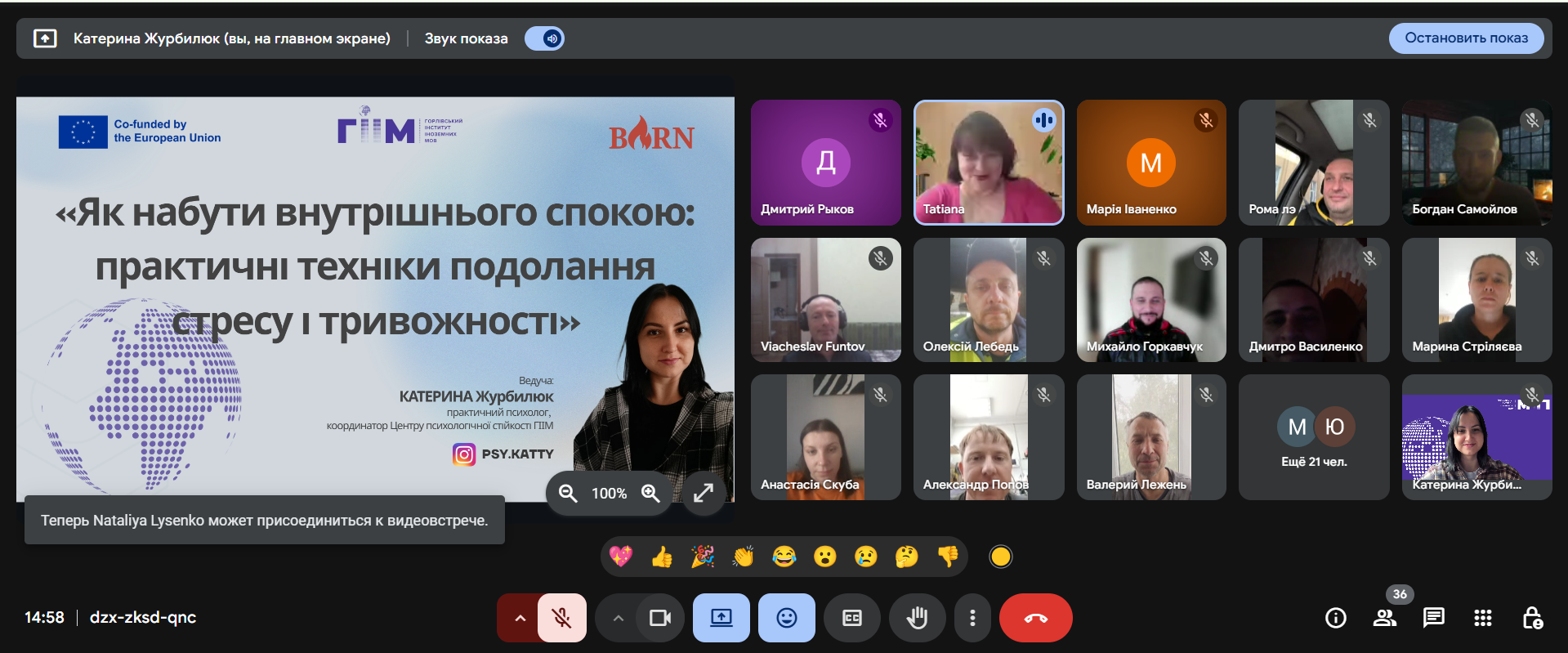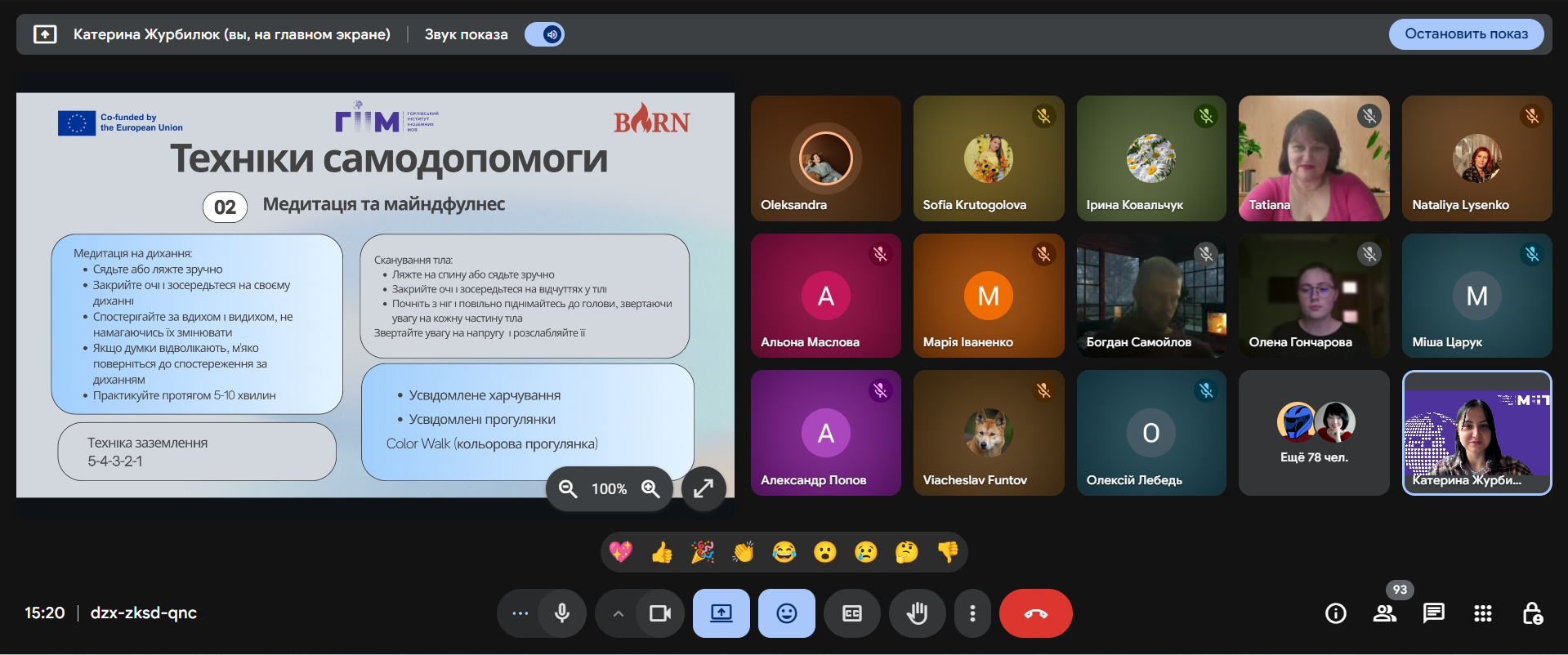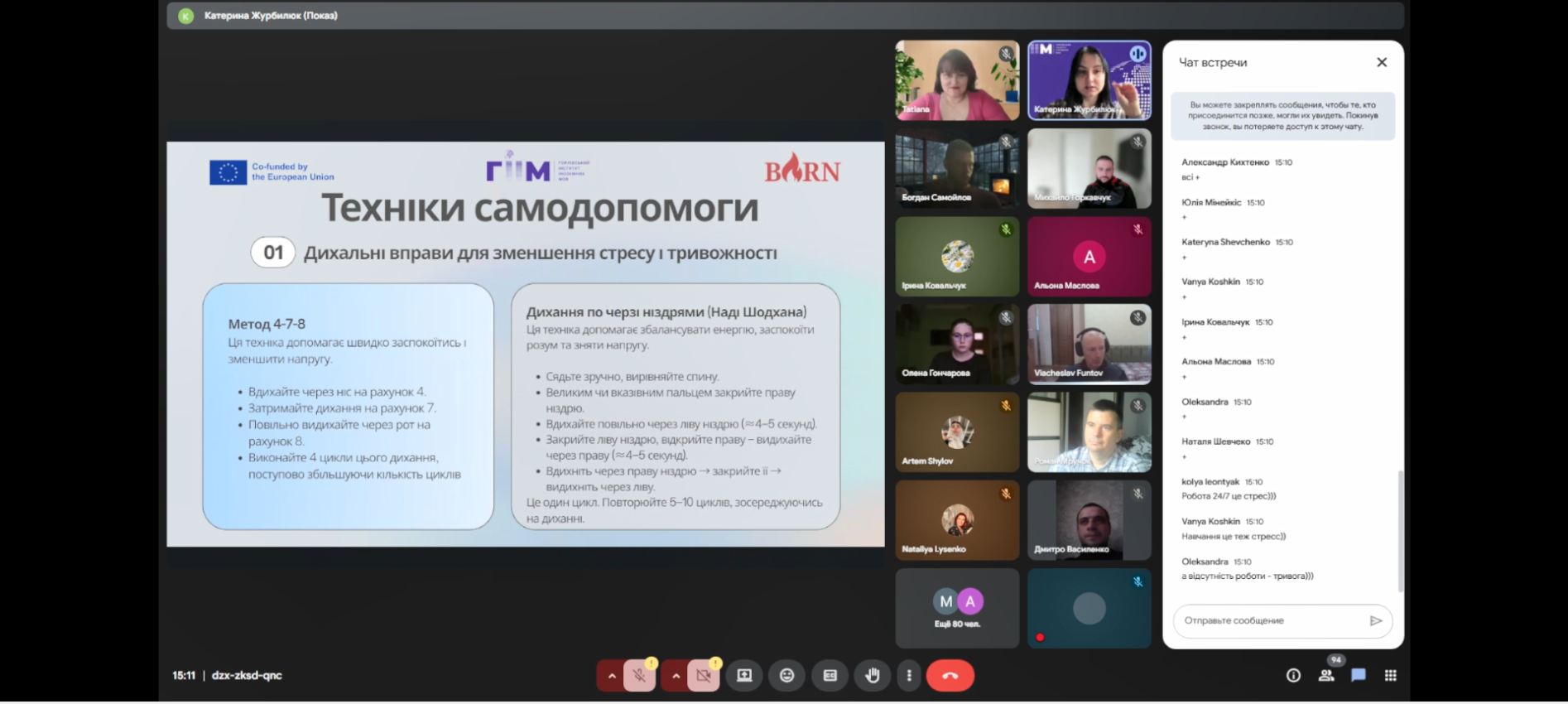
On October 10, World Mental Health Day, the Horlivka Institute of Foreign Languages of the Donbass State Pedagogical University, together with the Department of Youth Policy and Children's Affairs of the Bakhmut City Council, organized an online event dedicated to finding inner balance and psychological resilience.
The webinar "How to Gain Inner Peace: Practical Techniques for Overcoming Stress and Anxiety" brought together about 100 participants — young people from higher, pre-university, and vocational education institutions temporarily relocated from the Bakhmut urban community to safer regions of Ukraine. The goal of the meeting was to provide young people with effective tools to support mental health in today's difficult conditions.
The event was hosted by Kateryna Zhurbilyuk, a practicing psychologist and coordinator of the Center for Psychological Resilience at the Institute of International Relations. She shared with the participants a number of proven techniques that help cope with high levels of stress, anxiety, and emotional exhaustion — conditions that are familiar to many Ukrainians today.
The focus of attention was on methods of: rapid self-regulation in critical situations; deep relaxation and restoration of emotional resources; development of awareness and internal balance.
Mental health is not a luxury, but a necessary condition for a full life and education, especially for young people who are creating their future in conditions of war. The knowledge and skills gained will become an important resource for the webinar participants in their everyday lives.
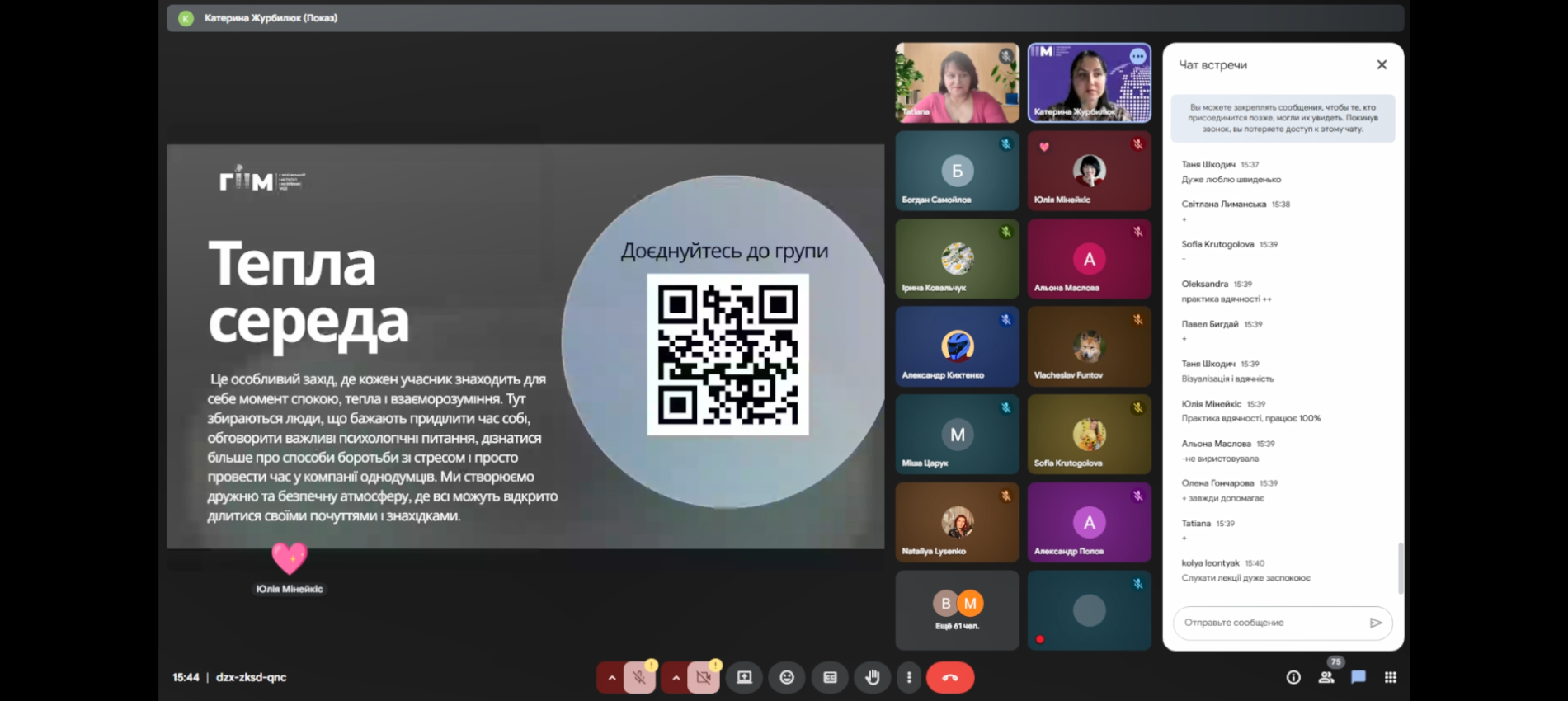
This is how Psychology Week at GIIM ended. But in reality, this is just the beginning. From now on, such meetings will take place every Wednesday throughout the academic year.
The Warm Wednesday project is a space where you can stop, hear yourself, share, recover, and find inner support. We invite everyone who wants to join our events — because psychological resilience begins with taking care of yourself.
Psychology Week was organized and held with the support of the Erasmus+ KA2 BURN project – “Enhancing Psychological Resilience and Well-being of the University Community in the (Post)War Ukrainian State” (BURN – ERASMUS-EDU-2023-CBHE), funded by the European Union.